Masonry Estimating in Austin, TX
Accurate masonry estimating for Austin's unique blend of Hill Country aesthetics and modern commercial design.
Masonry Estimating in Austin, TX
Masonry in Austin is strongly influenced by the local architectural vernacular, which heavily features native materials like Texas limestone and Leuders stone. Whether it's a sprawling custom home in Westlake or a new commercial development in the Domain, accurate masonry estimating requires a deep understanding of these premium materials. We provide precise, line-item takeoffs that capture the true cost of material, specialized labor, and complex architectural details.
Austin Masonry Cost Drivers
- Native Stone Selection: Prices vary wildly between different cuts and sources of native Texas limestone (e.g., chopped, sawn, rubble). We specify exactly what the architect requires.
- Strict Energy Codes: Austin Energy Green Building (AEGB) standards often require specific continuous insulation strategies behind masonry veneers, impacting the overall wall assembly cost.
- Custom Blends and Patterns: High-end Austin projects frequently use custom mortar colors and complex bond patterns, requiring specialized, higher-priced labor.
The Austin Market: What Changes Your Masonry Estimate
Austin Construction Market Overview
Austin's construction market has been supercharged by the tech boom, leading to a surge in commercial office space, high-density residential towers downtown, and luxury custom homes in the Hill Country. The market is characterized by high demand, premium pricing, and a strong emphasis on sustainability and design.
Building in Austin presents unique estimating challenges: building into the rocky limestone of the Hill Country requires specialized excavation; strict environmental regulations protect the local watershed; and traffic congestion affects material delivery and labor productivity.
Austin Permitting & Green Building
The City of Austin Development Services Department is known for having some of the strictest building codes and longest review times in Texas. Austin's Energy Conservation Audit and Disclosure (ECAD) ordinance and the Austin Energy Green Building (AEGB) ratings significantly impact construction costs. Our estimates account for these premium environmental compliance costs, heritage tree protection, and the often-lengthy permitting timeline.
Our Masonry Estimating Process for Austin Projects
Confirm veneer vs. structural masonry and coordinate with foundation type (post-tension vs. conventional slab) to determine expansion joint requirements.
Calculate actual brick and block quantities from the drawings based on unit size, mortar joint thickness, and bond pattern - not a flat square-foot multiplier.
Price veneer ties, through-wall flashing, and expansion joint material as explicit line items rather than a blended accessories allowance.
Count lintel block, arches, soldier courses, and custom cuts individually, and apply labor rates matched to pattern complexity and wall height.
Frequently Asked Questions: Masonry Estimating in Austin
Do you estimate native Texas limestone veneers?
Yes, we are highly experienced in estimating various cuts and finishes of local limestone, including appropriate waste factors and skilled labor rates.
Can you price complex outdoor living masonry?
Absolutely. We regularly estimate elaborate outdoor kitchens, fireplaces, and masonry hardscaping common in luxury Austin homes.
Does brick veneer really need different detailing than structural masonry?
Yes - veneer is a non-structural skin tied to the wall behind it, and on Texas’s expansive soils it needs expansion joints and flexible ties to accommodate foundation movement without cracking. Structural masonry is detailed differently since it’s part of the building’s load path.
How do you calculate brick quantities - square footage, or actual unit count?
Actual unit count, calculated from the specific brick size, mortar joint thickness, and bond pattern shown in the drawings. A flat square-foot multiplier doesn’t account for how much those three variables change actual quantity needed.
Do you estimate rock excavation for Austin Hill Country projects?
Yes. A critical part of any Austin-area estimate is evaluating the geotechnical report. If limestone is present, we calculate specific rock excavation volumes, which carry significantly higher costs than standard soil excavation.
Sample Projects Across Texas
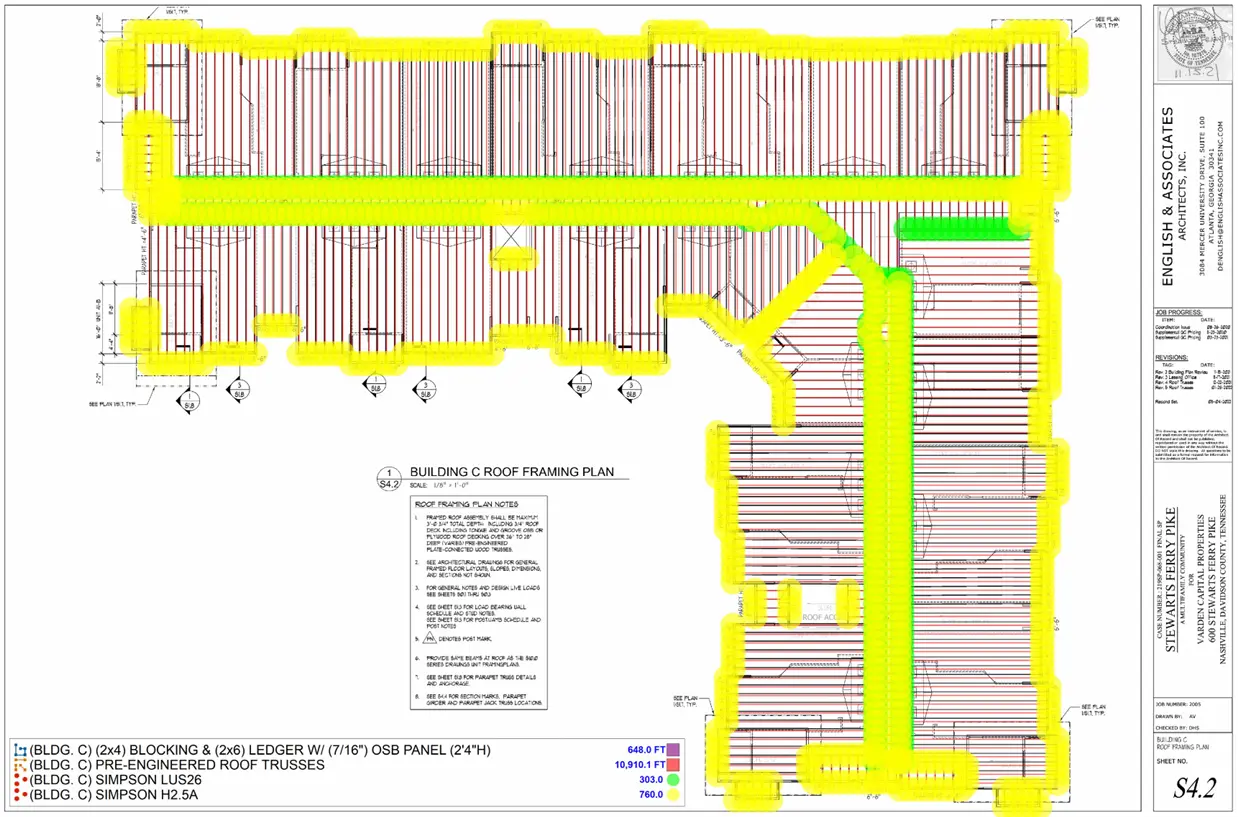
Recent takeoffs and estimates delivered for Texas contractors.
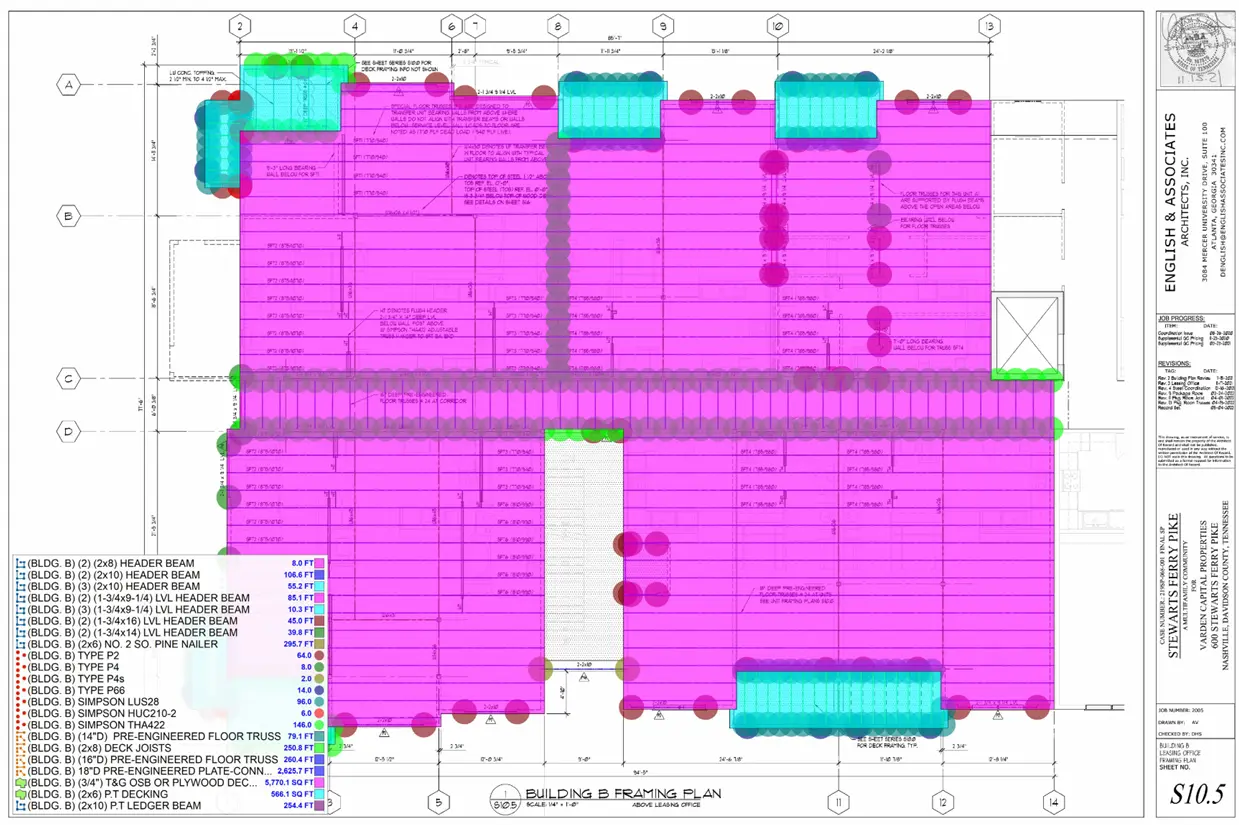
Subdivision Lumber Takeoff
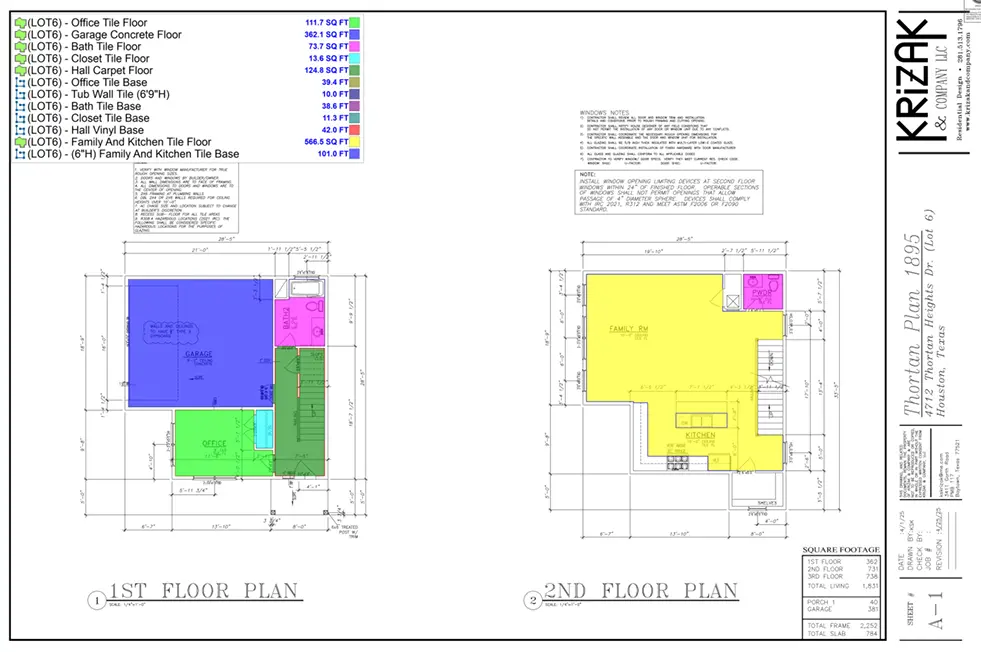
Custom Home Lumber Package