Flooring Estimating in Houston, TX
Houston flooring estimating requires attention to the post-tension slab flatness tolerances that determine finish floor material eligibility — a PT slab with residual camber or deflection can eliminate hardwood or large-format tile as options before a single flooring square foot is priced.
Flooring Estimating in Houston, TX
Houston flooring estimating starts with the slab — specifically, the flatness and levelness of Houston's ubiquitous post-tension slabs, which can carry residual camber, differential deflection, or localized high spots that affect which flooring materials can be installed and what substrate preparation is required. Our flooring estimating services in Houston include substrate assessment scope — grinding, self-leveling underlayment, or feather finishing — as a separate line item when PT slab conditions require it.
Houston's humidity environment makes moisture-sensitive flooring materials — solid hardwood, certain engineered wood products, and non-moisture-tolerant luxury vinyl — problematic in below-slab or slab-on-grade applications without proper moisture mitigation. We specify moisture barrier systems and acclimation periods as part of the flooring scope for humidity-sensitive materials in Houston's climate.
Houston's commercial flooring market spans a wide range: the Texas Medical Center drives demand for seamless vinyl, epoxy flooring, and rubber flooring in clinical environments; the Energy Corridor produces demand for Class-A commercial carpet and luxury vinyl tile in corporate interiors; and Houston's massive multifamily market drives volume in luxury vinyl plank and carpet for apartment projects throughout the metro.
Houston-Specific Flooring Cost Drivers
- Post-tension slab substrate: PT slab flatness and levelness issues often require grinding, self-leveling underlayment, or extensive feather finishing before certain flooring materials can be installed — a scope item that varies widely by slab condition.
- Moisture mitigation: Slab moisture emission rates in Houston's humid environment can exceed flooring manufacturer limits, requiring moisture mitigation membrane systems before floating floor installations.
- Medical Center healthcare flooring: Clinical flooring (seamless sheet vinyl, conductive vinyl, epoxy) in the Texas Medical Center requires clean room protocols, seamless welded seams, and cove base systems at specialty cost.
- Multifamily volume: Houston's large apartment construction market drives volume pricing opportunities on LVP and carpet packages — quantities across multiple floors reduce unit cost below single-project estimates.
- Energy Corridor Class-A: Corporate tenant improvements in the Energy Corridor specify premium flooring — broadloom carpet, hardwood insets, and large-format porcelain tile — at above-average specification levels.
The Houston Market: What Changes Your Flooring Estimate
Houston Construction Market Overview
As the largest city in Texas and the energy capital of the world, Houston's construction market is massive and diverse. From sprawling suburban residential developments in Cypress and Katy to high-rise commercial towers downtown and massive industrial complexes along the Houston Ship Channel, estimating in Houston requires deep local knowledge.
Our Houston estimates account for critical local factors: expansive "gumbo" clay soils that dictate heavy foundation engineering, Gulf Coast windstorm and hurricane resistance requirements (TWIA), and the unique logistical challenges of building in a sprawling, flood-prone metropolitan area.
Houston & Harris County Permitting
The City of Houston is famous for having no formal zoning laws, but that doesn't mean building is a free-for-all. Deed restrictions act as de facto zoning, and the City of Houston Public Works department enforces strict commercial and residential building codes. Our estimates can include allowances for Harris County floodplain management permits, City of Houston impact fees, and the often-lengthy Houston plan review process.
Our Flooring Estimating Process for Houston Projects
We analyze the room finish schedule to map exactly which materials go in which rooms.
Digital takeoff of net floor areas, deducting permanent cabinetry or equipment.
Measuring the linear footage of wall base and doorway transitions between different materials.
Applying specific waste factors based on the material type, room shape, and installation pattern.
Frequently Asked Questions: Flooring Estimating in Houston
Why do Houston flooring estimates include substrate preparation as a separate line item?
Houston's post-tension slabs frequently have surface variations — residual camber from PT stressing, localized deflection at panel edges, or surface voids from form release — that must be corrected before certain flooring materials can be installed. Large-format porcelain tile, hardwood, and LVP all have maximum allowable substrate variation tolerances that PT slabs sometimes exceed. Substrate preparation (grinding, self-leveling, or skim coating) varies from a minor expense to a significant line item depending on slab condition.
What flooring materials work best in Houston's humid climate?
Luxury vinyl plank (LVP) and luxury vinyl tile (LVT) are the most moisture-tolerant options for Houston slab-on-grade applications and perform well throughout the metro. Solid hardwood is problematic on or near slab-on-grade in Houston — moisture emission from the slab and ambient humidity cause seasonal expansion and contraction that leads to gapping and cupping. Engineered hardwood with higher plywood core thickness performs better than solid wood in Houston conditions but still requires moisture mitigation protocols.
How does healthcare flooring in the Texas Medical Center differ from commercial flooring?
Clinical flooring in the Texas Medical Center requires seamless sheet vinyl or seamless epoxy in patient care areas (no grout lines that harbor bacteria), anti-static or conductive vinyl in operating rooms and procedure areas, and cove base systems with heat-welded seams for infection control compliance. These specifications are substantially more expensive than standard commercial carpet or tile, require specialized installation crews, and have strict inspection requirements from hospital infection control committees.
How do you calculate waste for flooring?
Waste factors vary significantly. Carpet tile might only need 5% waste, while a large-format porcelain tile laid on a diagonal in a room with many angles might require 15-20% waste. We apply waste factors logically based on the material and floor plan.
Do you include floor prep?
Floor preparation (leveling, patching, moisture mitigation) is often an unknown until the existing floor is removed. For new construction, we include standard prep. For renovations, we typically include an allowance based on historical averages, clearly noted as a contingency.
Do your Houston estimates account for hurricane requirements?
Yes. For projects in Houston and Harris County, we estimate the required wind-rated assemblies, impact-resistant glazing, and enhanced structural tie-downs required by Gulf Coast building codes and the Texas Windstorm Insurance Association (TWIA).
Sample Projects Across Texas
Recent takeoffs and estimates delivered for Texas contractors.
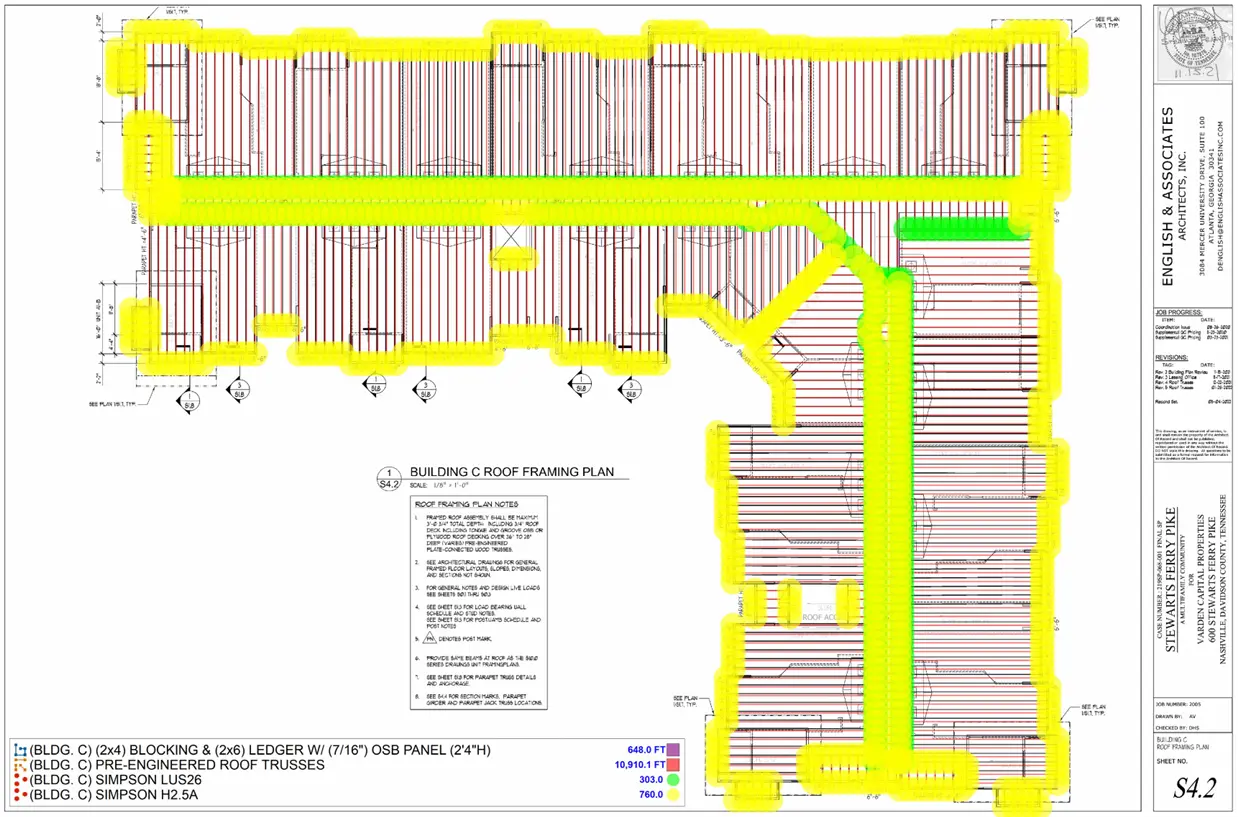
Custom Home Lumber Package
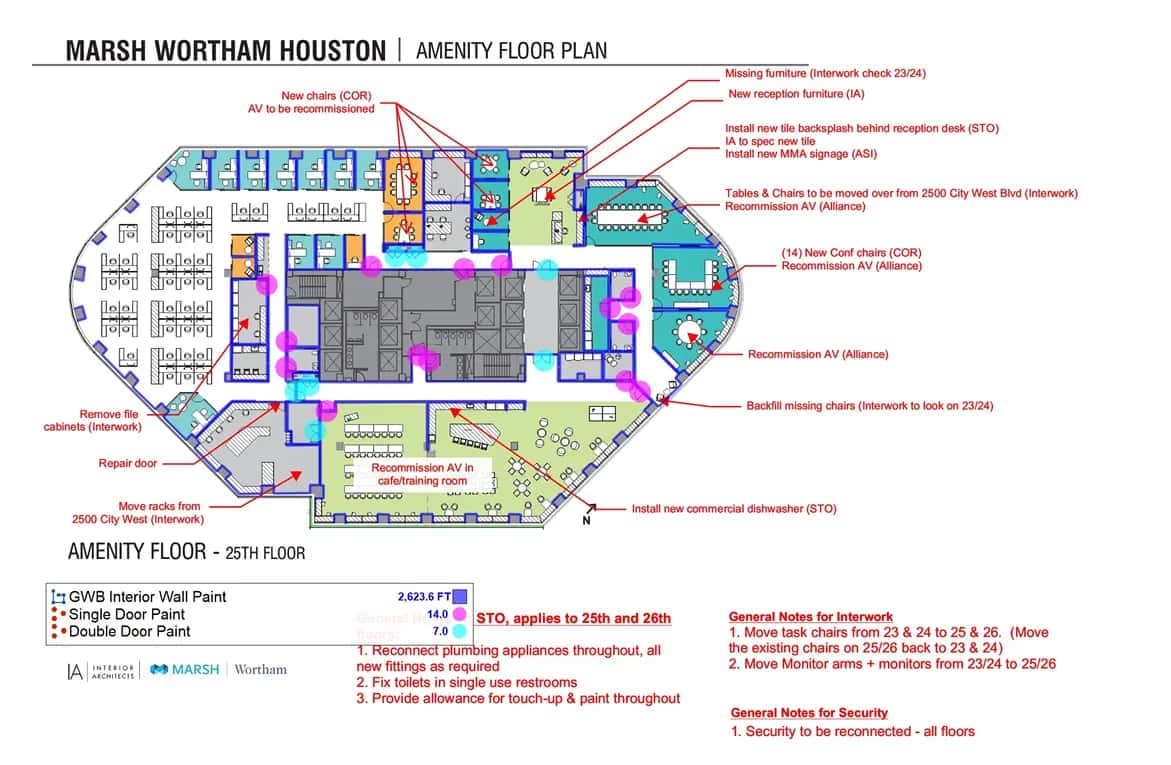
Exterior Commercial Paint