Masonry Estimating in Houston, TX
Houston masonry estimating must address what gumbo clay does to masonry foundations and veneer systems — expansion and contraction cycles that crack grout lines and separate brick from substrate require control joint placement and flexible anchorage that inland Texas masonry projects don't always specify.
Masonry Estimating in Houston, TX
Houston masonry estimating requires specific attention to what the city's expansive gumbo clay does to masonry assemblies over time. Clay soil that expands during wet periods and contracts during dry periods creates differential movement in slab foundations — movement that transmits directly to brick veneer anchored to the slab perimeter. Our masonry estimating services in Houston include control joint placement, flexible brick ties, and expansion joint details that prevent the cracking patterns common in Houston masonry that was detailed for stable soil conditions.
Houston's Gulf Coast environment also introduces corrosion considerations for masonry anchors and ties. Standard carbon steel ties in a coastal humid environment begin to show corrosion within a few years — Houston masonry specifications for near-coastal projects call for stainless steel or hot-dip galvanized ties throughout, which adds material cost but eliminates premature anchor failure that leads to veneer separation.
The Houston commercial masonry market includes significant institutional and healthcare work at the Texas Medical Center, warehouse and distribution masonry (tilt-wall adjacent CMU cores) in the logistics corridors, and premium residential masonry in River Oaks, Memorial, and West University neighborhoods where custom brick selection and traditional masonry detailing command premium labor rates.
Houston-Specific Masonry Cost Drivers
- Gumbo clay expansion joints: Control joints must be placed at closer intervals in Houston brick veneer systems to accommodate soil-driven foundation movement — closer joint spacing requires more joint material and more careful layout.
- Corrosion-resistant ties: Coastal humidity requires stainless steel or hot-dip galvanized masonry ties and anchors throughout — standard carbon steel ties fail within years in Gulf Coast conditions.
- Flexible anchorage systems: Gumbo clay movement requires brick tie systems that allow vertical movement between the veneer and structure — adjustable tie systems cost more than rigid ties but prevent veneer cracking.
- Medical Center institutional masonry: Healthcare masonry at TMC requires premium face brick, precision tolerances, and specialized grout and mortar specifications for institutional durability.
- No zoning deed restriction masonry standards: Many Houston neighborhoods enforce masonry percentage requirements through deed restrictions rather than zoning ordinances — compliance verification is part of the pre-bid scope review.
The Houston Market: What Changes Your Masonry Estimate
Houston Construction Market Overview
As the largest city in Texas and the energy capital of the world, Houston's construction market is massive and diverse. From sprawling suburban residential developments in Cypress and Katy to high-rise commercial towers downtown and massive industrial complexes along the Houston Ship Channel, estimating in Houston requires deep local knowledge.
Our Houston estimates account for critical local factors: expansive "gumbo" clay soils that dictate heavy foundation engineering, Gulf Coast windstorm and hurricane resistance requirements (TWIA), and the unique logistical challenges of building in a sprawling, flood-prone metropolitan area.
Houston & Harris County Permitting
The City of Houston is famous for having no formal zoning laws, but that doesn't mean building is a free-for-all. Deed restrictions act as de facto zoning, and the City of Houston Public Works department enforces strict commercial and residential building codes. Our estimates can include allowances for Harris County floodplain management permits, City of Houston impact fees, and the often-lengthy Houston plan review process.
Our Masonry Estimating Process for Houston Projects
Confirm veneer vs. structural masonry and coordinate with foundation type (post-tension vs. conventional slab) to determine expansion joint requirements.
Calculate actual brick and block quantities from the drawings based on unit size, mortar joint thickness, and bond pattern - not a flat square-foot multiplier.
Price veneer ties, through-wall flashing, and expansion joint material as explicit line items rather than a blended accessories allowance.
Count lintel block, arches, soldier courses, and custom cuts individually, and apply labor rates matched to pattern complexity and wall height.
Frequently Asked Questions: Masonry Estimating in Houston
Why does brick veneer crack more in Houston than in other Texas cities?
Houston's gumbo clay foundation movement is the primary cause. Expansive clay soil shifts slab foundations seasonally — when the slab moves and the brick veneer is rigidly anchored to it, the veneer cracks along grout lines. Properly detailed Houston masonry uses control joints at closer intervals, flexible anchoring systems that allow relative movement, and expansion joints at building corners — specifications that add cost upfront but prevent the costly cracking patterns that appear within 5-10 years on improperly detailed Houston masonry.
Do Houston masonry estimates require corrosion-resistant ties and anchors?
Yes for any project within proximity to the Gulf Coast. Standard carbon steel masonry ties corrode in Houston's high-humidity, salt-air environment — near-coastal projects develop rust bleed-through and eventual anchor failure within years. Stainless steel or hot-dip galvanized ties cost more per unit but are the standard specification for coastal Harris County masonry and prevent expensive re-anchoring of failing veneer.
How do Houston's deed restriction masonry requirements affect the estimate?
Houston has no formal zoning, but thousands of neighborhoods operate under deed restrictions that specify minimum masonry percentages on facades (often 80-100% of exterior wall area). These requirements are enforced by civic associations and affect both material quantities and facade layout decisions. We verify deed restriction masonry requirements as part of scope review for Houston residential and commercial projects in restricted areas.
Does brick veneer really need different detailing than structural masonry?
Yes - veneer is a non-structural skin tied to the wall behind it, and on Texas’s expansive soils it needs expansion joints and flexible ties to accommodate foundation movement without cracking. Structural masonry is detailed differently since it’s part of the building’s load path.
How do you calculate brick quantities - square footage, or actual unit count?
Actual unit count, calculated from the specific brick size, mortar joint thickness, and bond pattern shown in the drawings. A flat square-foot multiplier doesn’t account for how much those three variables change actual quantity needed.
Do your Houston estimates account for hurricane requirements?
Yes. For projects in Houston and Harris County, we estimate the required wind-rated assemblies, impact-resistant glazing, and enhanced structural tie-downs required by Gulf Coast building codes and the Texas Windstorm Insurance Association (TWIA).
Sample Projects Across Texas
Recent takeoffs and estimates delivered for Texas contractors.
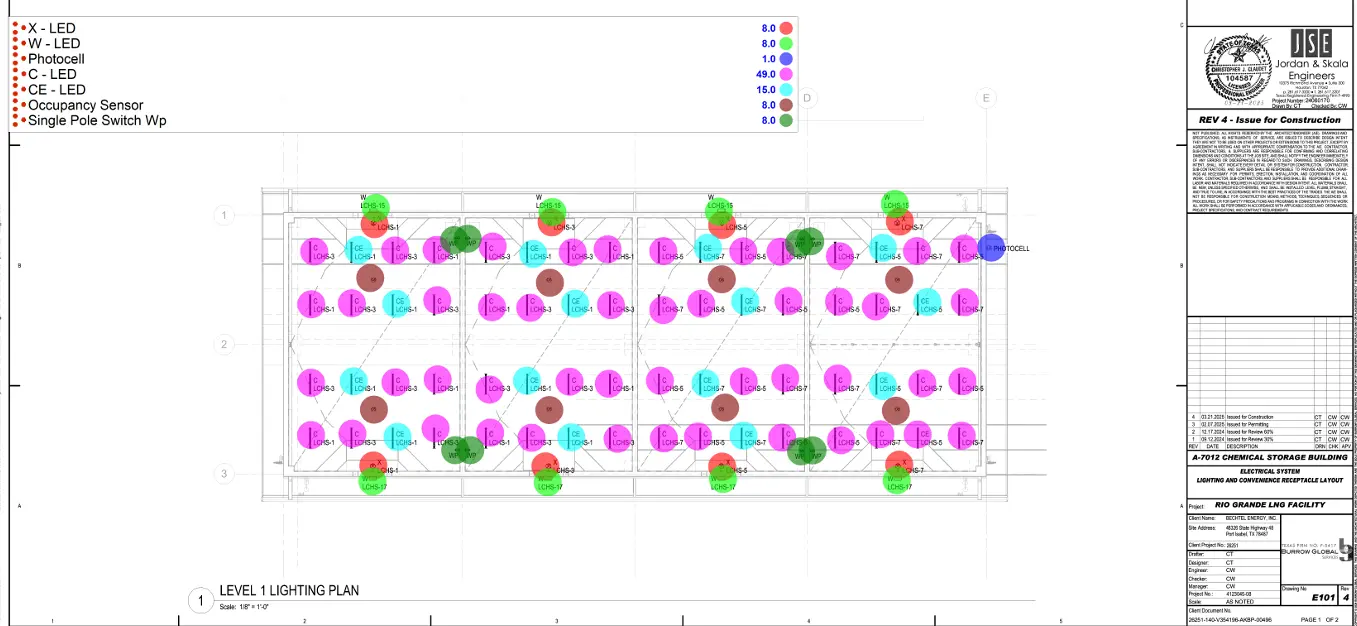
Industrial Warehouse Wiring
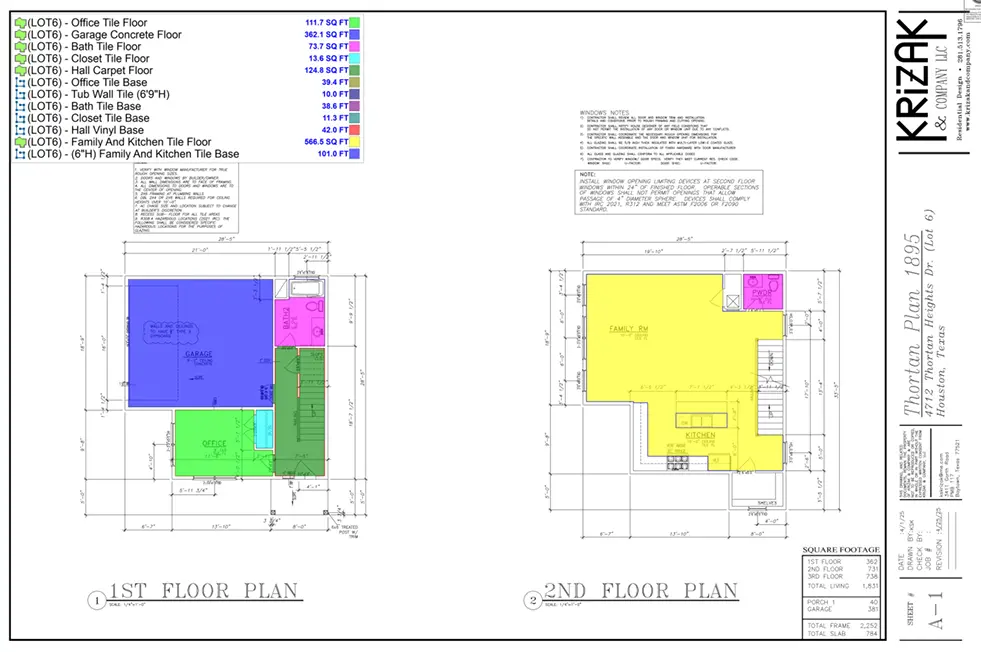
Commercial Flooring Project