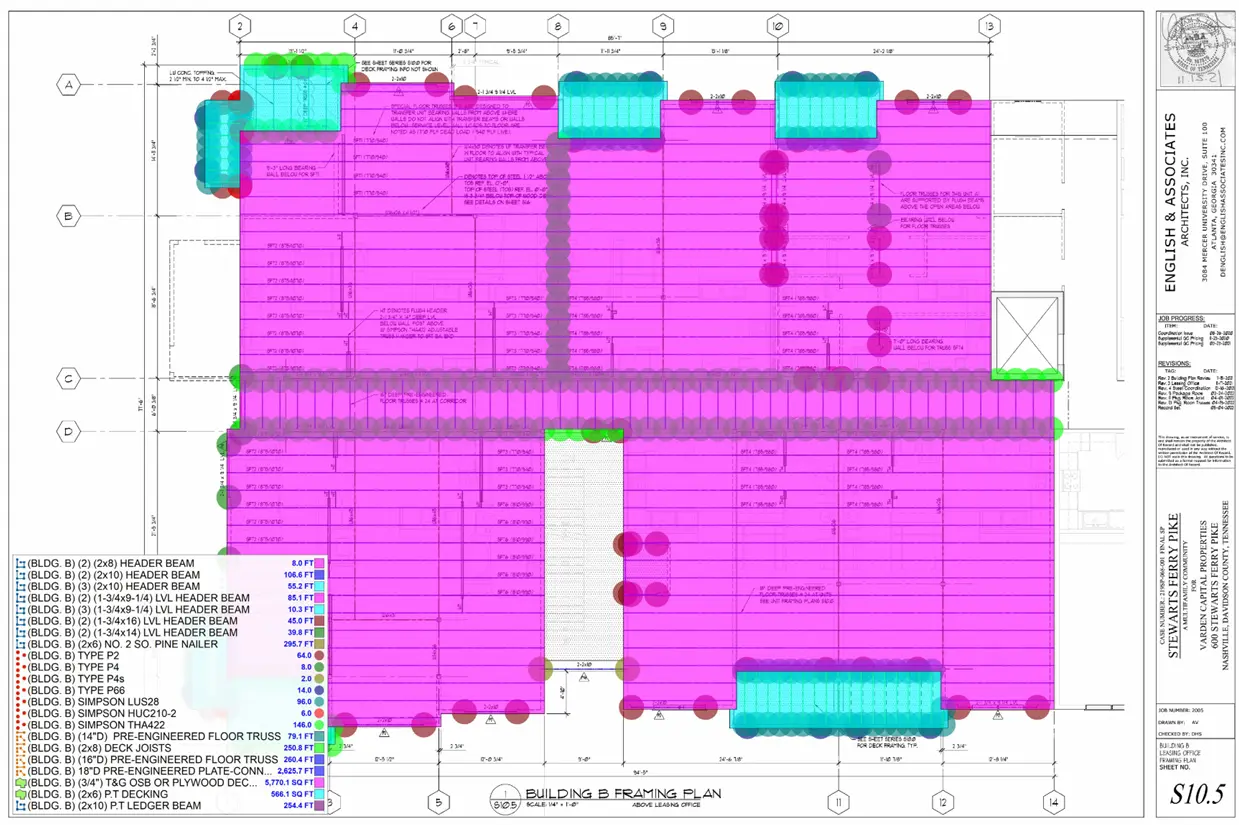
Material & Quantity Takeoff in Houston, TX
Houston material takeoffs must account for Gulf Coast shipping disruptions, Port of Houston import variability, and the gumbo clay soil conditions that change material specifications for concrete, masonry, insulation, and framing compared to standard Texas baseline specifications.
Material Quantity Takeoff in Houston, TX
Houston material quantity takeoffs require understanding of how Gulf Coast climate and soil conditions change material specifications across virtually every trade category. Post-tension cable replaces conventional rebar mat on most foundations. Moisture-resistant board replaces standard gypsum in exterior-adjacent locations. Corrosion-resistant hardware replaces standard zinc-plate fasteners near the coast. Elastomeric or higher-grade coatings replace standard exterior paint. Each of these specification differences changes the material quantities and unit costs in the takeoff — applying inland Texas specifications to Houston projects produces material lists that don't reflect the actual scope.
The Port of Houston — the nation's busiest in total cargo tonnage — affects construction material availability and lead times in Houston in ways that don't apply to inland Texas markets. When port congestion, labor actions, or storm closures interrupt import flow, building materials with significant import content (steel products, electrical components, flooring, tile) can experience supply disruptions and price spikes that a Houston material takeoff must account for with appropriate contingency.
Houston Material Takeoff Considerations
- Coastal specification upgrades: Corrosion-resistant hardware, moisture-resistant board, elastomeric coatings, and coastal-rated fixtures change material quantities and unit costs versus standard specifications.
- Post-tension material accounting: PT cable, anchor hardware, and stressing equipment are separate material categories from conventional rebar — takeoffs must track both PT and conventional rebar scope separately.
- Port logistics variability: Import-dependent materials (certain steel products, electrical components, tile) are subject to Port of Houston disruptions — lead time contingency is a standard inclusion in Houston material takeoffs.
- TWIA-compliant products: TWIA-approved windows, doors, and roofing products must be explicitly called out as separate material categories with verified product compliance.
- Industrial material premiums: Ship Channel industrial projects use specialty materials (chemical-resistant pipe, explosion-proof fixtures, API-spec structural steel) at significant cost multiples above standard commercial materials.
The Houston Market: What Changes Your Quantity Takeoff Estimate
Houston Construction Market Overview
As the largest city in Texas and the energy capital of the world, Houston's construction market is massive and diverse. From sprawling suburban residential developments in Cypress and Katy to high-rise commercial towers downtown and massive industrial complexes along the Houston Ship Channel, estimating in Houston requires deep local knowledge.
Our Houston estimates account for critical local factors: expansive "gumbo" clay soils that dictate heavy foundation engineering, Gulf Coast windstorm and hurricane resistance requirements (TWIA), and the unique logistical challenges of building in a sprawling, flood-prone metropolitan area.
Houston & Harris County Permitting
The City of Houston is famous for having no formal zoning laws, but that doesn't mean building is a free-for-all. Deed restrictions act as de facto zoning, and the City of Houston Public Works department enforces strict commercial and residential building codes. Our estimates can include allowances for Harris County floodplain management permits, City of Houston impact fees, and the often-lengthy Houston plan review process.
Our Material & Quantity Takeoff Process for Houston Projects
Send us your construction drawings in PDF, DWG, or BIM format. We accept plans at any stage of design.
We confirm which trades and divisions you need quantified - full CSI breakdown or specific scopes only.
Our estimators perform precision digital takeoffs using PlanSwift and Bluebeam, sheet by sheet.
A senior estimator cross-checks all quantities against the specifications and plan notes.
You receive organized takeoff spreadsheets by CSI division, ready for your pricing or purchasing team.
Frequently Asked Questions: Material & Quantity Takeoff in Houston
How does a Houston material takeoff differ from a Dallas or Austin takeoff for the same building type?
Houston's climate and soil conditions change material specifications across nearly every trade: post-tension cable replaces conventional rebar mats, moisture-resistant board is specified where standard gypsum would be used inland, elastomeric or higher-grade exterior coatings replace standard latex, corrosion-resistant hardware is specified for all coastal applications, and TWIA-compliant windows and roofing products replace standard residential products. Each specification difference changes material quantities and unit costs in the takeoff.
Can you provide material takeoffs in formats compatible with Houston supplier pricing systems?
Yes. We provide material takeoffs in Excel, CSV, and PDF formats compatible with major Houston supplier pricing systems. For large commercial projects, we can format the takeoff to align with specific supplier quote request formats. We regularly work with Houston's major suppliers for concrete, structural steel, MEP materials, and finishing materials to verify current pricing on large takeoff packages.
What is the difference between a takeoff and an estimate?
A takeoff measures quantities - how much material you need. An estimate applies pricing to those quantities to determine cost. The takeoff is the first step; the estimate is the complete picture.
Can you do a takeoff from preliminary or schematic drawings?
Yes. We can perform takeoffs at any design stage, from conceptual sketches to 100% construction documents. Earlier-stage takeoffs include appropriate assumptions and contingencies.
Do your Houston estimates account for hurricane requirements?
Yes. For projects in Houston and Harris County, we estimate the required wind-rated assemblies, impact-resistant glazing, and enhanced structural tie-downs required by Gulf Coast building codes and the Texas Windstorm Insurance Association (TWIA).
Sample Projects Across Texas
Recent takeoffs and estimates delivered for Texas contractors.
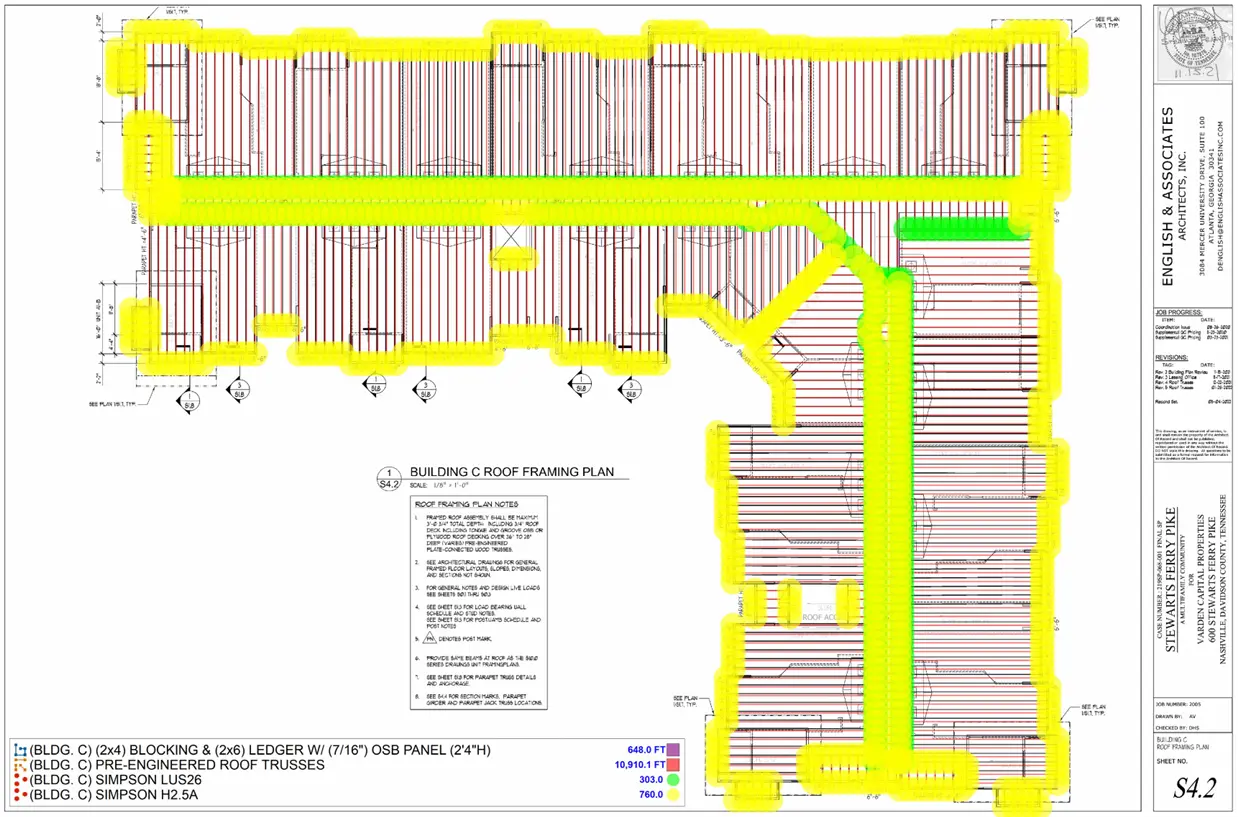
Custom Home Lumber Package
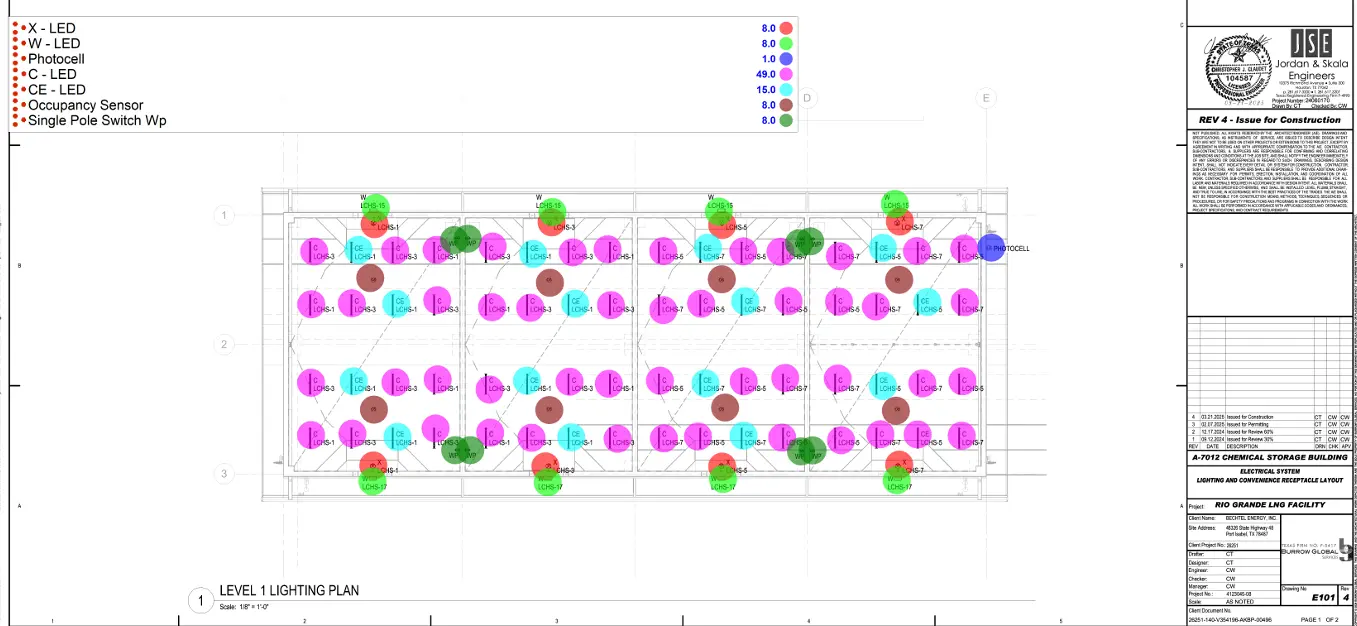
Industrial Warehouse Wiring