Masonry Estimating in Arlington, TX
Precision masonry estimating to meet Arlington's strict commercial and suburban aesthetic standards.
Masonry Estimating in Arlington, TX
Arlington maintains strict aesthetic standards, often requiring high percentages of masonry on commercial facades and residential developments. Estimating here requires detailing extensive brick veneer, cast stone accents, and the heavy structural CMU required for commercial firewalls and retail centers. We provide the granular accuracy needed to ensure masonry budgets are complete and competitive.
Arlington Masonry Cost Drivers
- High Masonry Requirements: Local ordinances often dictate 80-100% masonry exteriors. We accurately quantify the millions of bricks, required ties, mortar yield, and complex scaffolding required to meet these standards.
- Structural CMU for Retail: Arlington's expansive retail sector relies heavily on CMU block for load-bearing walls and fire separations. We estimate the block, structural grout, and rebar reinforcing line-by-line.
- Architectural Cast Stone: Commercial and high-end residential projects frequently feature cast stone headers, sills, and banding, which require precise counts and specialized installation labor rates.
The Arlington Market: What Changes Your Masonry Estimate
Arlington Construction Market Overview
Located perfectly between Dallas and Fort Worth, Arlington is a major construction hub in its own right. The market is anchored by the massive Entertainment District (AT&T Stadium, Globe Life Field, Texas Live!) which drives continuous commercial, hospitality, and mixed-use development.
Outside the entertainment core, Arlington sees significant multi-family development, industrial growth along the I-20 and 360 corridors, and a strong market for residential renovations in established neighborhoods.
Arlington Permitting & Zoning
The City of Arlington Planning and Development Services manages construction. Projects in the Entertainment District Overlay face specific architectural and landscaping standards. Our estimates account for local Arlington impact fees, utility tap costs, and the specific compliance requirements of the city's unified development code.
Our Masonry Estimating Process for Arlington Projects
Confirm veneer vs. structural masonry and coordinate with foundation type (post-tension vs. conventional slab) to determine expansion joint requirements.
Calculate actual brick and block quantities from the drawings based on unit size, mortar joint thickness, and bond pattern - not a flat square-foot multiplier.
Price veneer ties, through-wall flashing, and expansion joint material as explicit line items rather than a blended accessories allowance.
Count lintel block, arches, soldier courses, and custom cuts individually, and apply labor rates matched to pattern complexity and wall height.
Frequently Asked Questions: Masonry Estimating in Arlington
Do you account for scaffolding and hoisting in masonry estimates?
Yes, this is a major factor on commercial projects. We estimate the necessary equipment and adjust labor rates for multi-story installations.
Can you estimate structural CMU walls?
Absolutely. We detail the block count, rebar tonnage, and grout volume required for reinforced masonry walls.
Does brick veneer really need different detailing than structural masonry?
Yes - veneer is a non-structural skin tied to the wall behind it, and on Texas’s expansive soils it needs expansion joints and flexible ties to accommodate foundation movement without cracking. Structural masonry is detailed differently since it’s part of the building’s load path.
How do you calculate brick quantities - square footage, or actual unit count?
Actual unit count, calculated from the specific brick size, mortar joint thickness, and bond pattern shown in the drawings. A flat square-foot multiplier doesn’t account for how much those three variables change actual quantity needed.
Do you estimate mixed-use commercial projects in Arlington?
Yes, mixed-use development is common in Arlington, especially near the Entertainment District and downtown. We provide comprehensive estimates that separate residential, retail, and parking garage costs for accurate project financing.
Sample Projects Across Texas
Recent takeoffs and estimates delivered for Texas contractors.
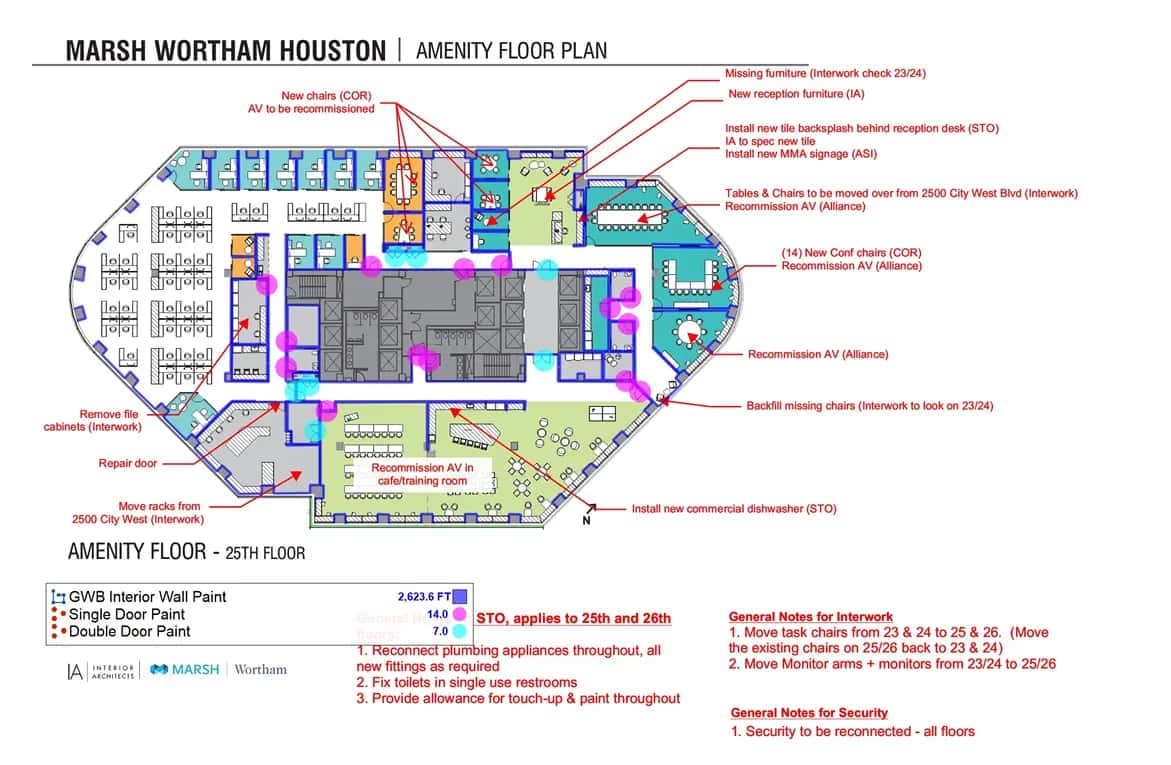
Exterior Commercial Paint
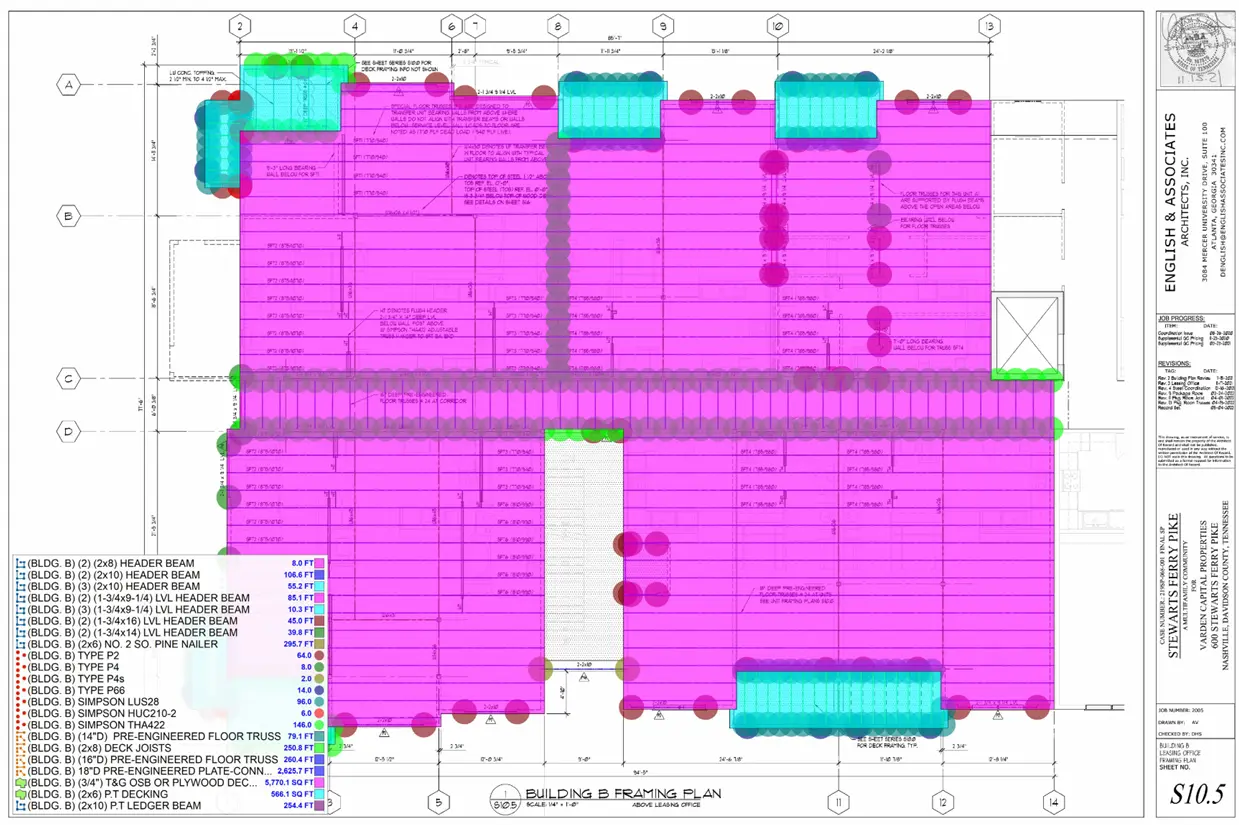
Subdivision Lumber Takeoff