Plumbing Estimating in Houston, TX
Houston is one of the few major Texas cities still operating under the Uniform Plumbing Code rather than the International Plumbing Code — a distinction that affects fixture unit calculations, pipe sizing, and material specifications on every project we estimate in Harris County.
Plumbing Estimating in Houston, TX
Houston operates under the Uniform Plumbing Code (UPC), placing it among a minority of major Texas cities that haven't transitioned to the International Plumbing Code (IPC). This matters for estimating: fixture unit tables, pipe sizing methods, and trap and vent requirements differ between the two codes, and an estimating firm applying IPC logic to a Houston project will produce incorrect pipe sizing and material quantities.
Houston's high water table — one of the shallowest in any major Texas city — significantly affects below-grade plumbing. Drain lines that run at 2-3 feet below finished floor in Dallas may run directly in the water table in parts of Houston, requiring sleeve sealing, high-density polyethylene pipe, or in some cases, above-slab drain routing that changes the entire plumbing layout. Our plumbing estimating services in Houston account for water table conditions by zone rather than applying a blanket below-grade assumption.
For the Houston Ship Channel industrial market, process plumbing — corrosion-resistant piping for chemical handling, high-pressure steam and process lines, and secondary containment plumbing — represents a fundamentally different scope than commercial plumbing, with material costs that can be 5-10x standard commercial pipe per linear foot depending on the chemical service class.
Houston-Specific Plumbing Cost Drivers
- UPC code (not IPC): Houston's Uniform Plumbing Code requires different fixture unit tables and pipe sizing than the IPC used by Dallas, Fort Worth, and most other Texas cities. Applying IPC logic to Houston projects produces incorrect takeoff quantities.
- High water table: Parts of Houston have groundwater within 2-3 feet of finished grade — below-grade drain and sewer routing must account for groundwater intrusion, requiring heavier pipe specifications and watertight sleeve sealing.
- FEMA flood zone impacts: Flood zone parcels require elevated utilities and hurricane-resistant penetration sealing for all plumbing exterior wall penetrations.
- Industrial process plumbing: Ship Channel chemical and refinery facilities require corrosion-resistant alloy piping, high-pressure steam systems, and secondary containment plumbing at multiples of standard commercial pipe cost.
- Harris County sewer capacity: Development in certain Houston growth corridors requires private lift stations when public sewer capacity is unavailable — a substantial plumbing cost item.
The Houston Market: What Changes Your Plumbing Estimate
Houston Construction Market Overview
As the largest city in Texas and the energy capital of the world, Houston's construction market is massive and diverse. From sprawling suburban residential developments in Cypress and Katy to high-rise commercial towers downtown and massive industrial complexes along the Houston Ship Channel, estimating in Houston requires deep local knowledge.
Our Houston estimates account for critical local factors: expansive "gumbo" clay soils that dictate heavy foundation engineering, Gulf Coast windstorm and hurricane resistance requirements (TWIA), and the unique logistical challenges of building in a sprawling, flood-prone metropolitan area.
Houston & Harris County Permitting
The City of Houston is famous for having no formal zoning laws, but that doesn't mean building is a free-for-all. Deed restrictions act as de facto zoning, and the City of Houston Public Works department enforces strict commercial and residential building codes. Our estimates can include allowances for Harris County floodplain management permits, City of Houston impact fees, and the often-lengthy Houston plan review process.
Our Plumbing Estimating Process for Houston Projects
Confirm whether the project falls under UPC (Austin, Houston, San Antonio) or IPC to ensure accurate fixture unit math.
Calculate WSFU and DFU loads to accurately size water supply, drainage, and venting.
Measurement of all sub-slab and above-ground piping, fittings, fixtures, and specialty systems.
Apply current Texas material pricing and labor rates split by rough-in and trim-out phases.
Frequently Asked Questions: Plumbing Estimating in Houston
How does Houston's UPC code affect plumbing estimates compared to Dallas or Fort Worth?
Houston uses the Uniform Plumbing Code while Dallas and Fort Worth use the International Plumbing Code. Fixture unit values, developed length calculations for venting, and pipe sizing tables differ between the two codes. An estimator applying IPC fixture unit tables to a Houston UPC project will produce different pipe sizing and material quantities — the difference matters on commercial projects with large fixture counts.
Why does Houston's high water table increase plumbing costs?
In parts of Houston, the water table is only 2-3 feet below grade — within the depth range of building drain and sewer lines. This requires heavier pipe wall thickness, watertight couplings, sleeve sealing at foundation penetrations, and in some cases, above-slab plumbing reconfiguration to keep drain lines above the water table. These are structural cost increases, not contractor contingency items.
Do you estimate plumbing for petrochemical facilities along the Ship Channel?
Yes, and industrial process plumbing is a fundamentally different scope from commercial plumbing. Chemical-service piping uses corrosion-resistant alloys (duplex stainless, HDPE, FRP), high-pressure steam systems require premium pipe class specifications, and secondary containment plumbing involves sloped concrete trench drains and chemical-resistant sumps. These materials cost several times more per linear foot than standard commercial copper or PVC.
Does my project fall under the UPC or the IPC?
It depends on your city. Austin, Houston, and San Antonio enforce the UPC; most other Texas municipalities enforce the IPC. We confirm jurisdiction before pricing so fixture unit and venting calculations match the code that actually applies.
Can you estimate plumbing separately from the rest of the MEP scope?
Yes this page covers plumbing as a standalone trade. If you need mechanical and electrical priced alongside it as a coordinated system, see our MEP Estimating Services page.
Do your Houston estimates account for hurricane requirements?
Yes. For projects in Houston and Harris County, we estimate the required wind-rated assemblies, impact-resistant glazing, and enhanced structural tie-downs required by Gulf Coast building codes and the Texas Windstorm Insurance Association (TWIA).
Sample Projects Across Texas
Recent takeoffs and estimates delivered for Texas contractors.
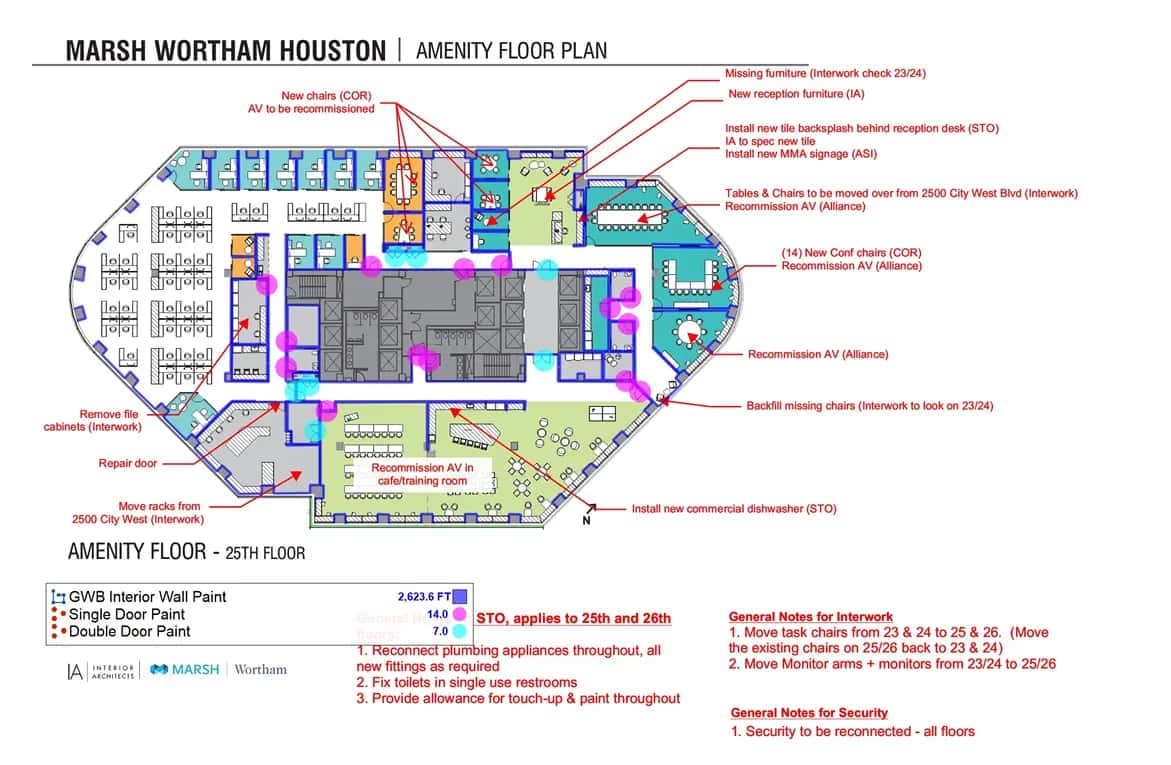
Exterior Commercial Paint
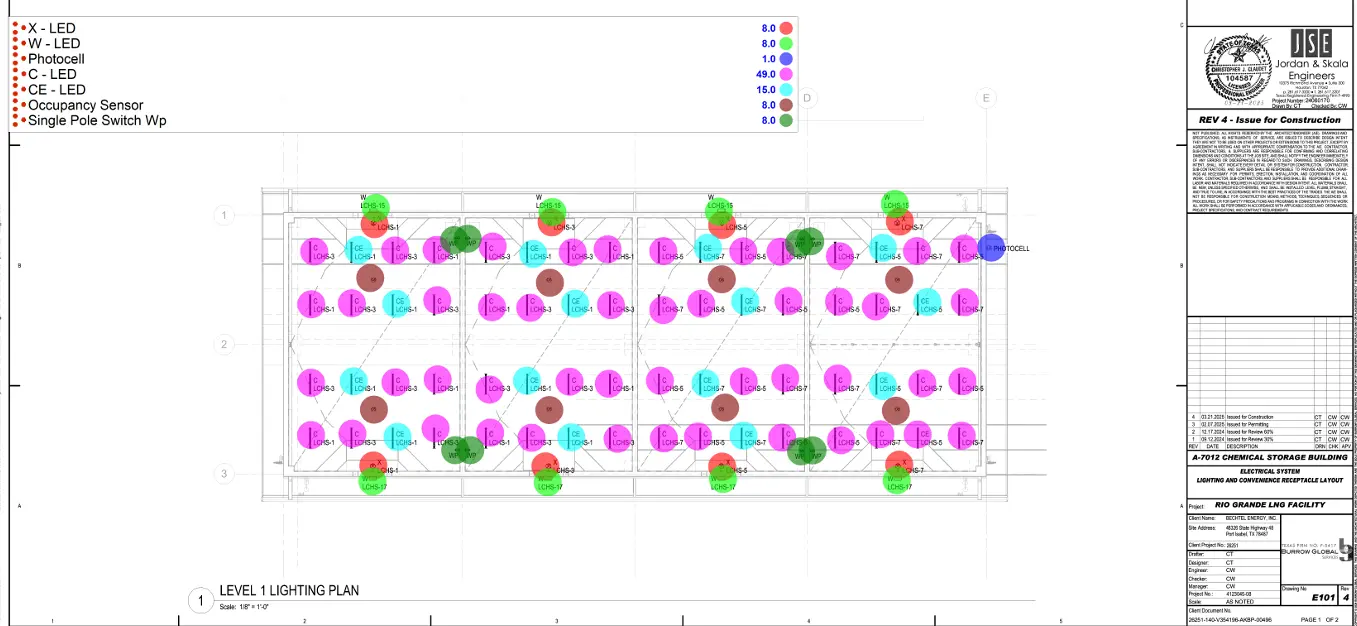
Industrial Warehouse Wiring